
Amyotrophic Lateral Sclerosis (ALS) has a particularly destructive hold on the human body, unlike many other diseases. ALS, also known as Lou Gehrig’s disease, stealthily infiltrates the body and gradually destroys voluntary muscle control, first by weakening speech, then strength, and finally breath. Messages from the brain to the muscles start to lag, like a phone line with increasing static, until the signal finally stops altogether.
However, the story has taken an incredibly optimistic turn in recent years. Physicians and researchers have started to change the trajectory from inevitable decline to prolonged resilience by combining medical innovation with patient-centered care. Even though they are not curative, treatments like edaravone and riluzole have significantly increased quality of life, and innovative gene therapies are changing the definition of survival for coming generations.
Key Facts About ALS Disease
| Attribute | Details |
|---|---|
| Full Name | Amyotrophic Lateral Sclerosis (ALS) |
| Also Known As | Lou Gehrig’s Disease, Motor Neuron Disease (MND), Charcot’s Disease |
| Primary Affected Systems | Nervous system (upper and lower motor neurons in brain and spinal cord) |
| Key Symptoms | Muscle weakness, twitching, cramps, slurred speech, swallowing and breathing difficulty |
| Common Onset Age | Between 45 and 75 years |
| Main Subtypes | Classic ALS, Limb-Onset, Bulbar-Onset, Primary Lateral Sclerosis, Progressive Muscular Atrophy |
| Life Expectancy | Typically 2–5 years; 10% live more than 10 years |
| Current Treatments | Riluzole, Edaravone, gene therapy (Tofersen), breathing support, feeding tubes, therapy-based care |
| Cause | Mostly unknown; 5–10% genetic; environmental triggers suspected |
| Prevalence | About 4.4 per 100,000 people worldwide |
| Diagnosis | Clinical observation, EMG, MRI, exclusion of other diseases |
| Research Reference | Mayo Clinic – ALS Overview |
Charting the Disintegration of the Body: How ALS Impairs Communication
Fundamentally, ALS is a breakdown in communication, albeit a particularly cruel one. Your brain gives orders. But those commands just don’t get to their destination because of motor neuron death. The mind becomes painfully aware of its increasing limitations as the body becomes trapped in itself over time, with cognitive abilities frequently remaining intact. It seems as though your muscles have permanently lost their ability to respond to mental commands for movement, leaving only silence.
Doctors are now detecting the illness earlier than ever before thanks to sophisticated diagnostic techniques like genetic screening and electromyography. Furthermore, early detection gives patients the priceless gift of preparation—both emotionally and medically—by enabling more prompt intervention, even though it cannot stop progression.
Environment and Genetics: An Intricate Dance of Triggers
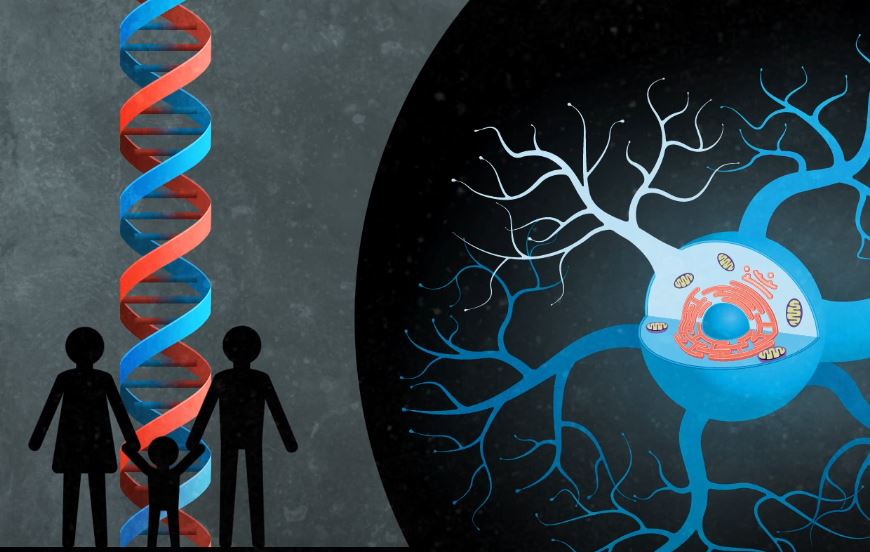
About 90% of ALS cases are sporadic, meaning they don’t have a known cause or family history. That does not imply, however, that they appear out of thin air. Through the use of sophisticated genetic modeling, scientists have identified mutations that cause a significant percentage of inherited cases, including those in the SOD1 and C9orf72 genes. Investigations into connections to head trauma, military service, and environmental pollutants are ongoing, suggesting a complicated and interconnected etiology.
Imagine ALS as the outcome of several tiny tools cooperating to pick a lock, rather than a single tool doing so. This interaction of environmental and genetic factors is what makes prevention so difficult. Nevertheless, scientists are determined to identify the entire set of triggers in order to make discoveries that will turn diagnosis into defense.
Getting Through the Phases: From Signs to Survival Techniques
ALS frequently starts out quietly. A coffee mug that fell. A step on the stairs was missed. The symptoms worsen over the course of several months, progressing to speech, swallowing, and eventually breathing. Although the rate at which this progression occurs varies greatly, it is brutally consistent. For some, it will take years. Others experience complete paralysis ten years later.
Multidisciplinary care teams have been used to provide patients with all-encompassing support. Speech therapists provide assistive communication devices, physical therapists help maintain mobility for as long as possible, and nutritionists provide calorie guidance when swallowing becomes challenging. Despite not being therapeutic, these adaptations are incredibly successful at maintaining autonomy.
The Battle for Breathing: The Importance of Respiratory Support
Respiratory failure is arguably the most deadly side effect of ALS. Simple actions like lying down can cause gasping episodes or orthopnea as the muscles controlling breathing start to weaken. Life expectancy can be considerably increased by non-invasive ventilation, which is worn like a sleep apnea mask. In more severe situations, patients may choose tracheostomies, which buy months or even years of extra time by enabling mechanical ventilation through a direct airway.
More significantly, though, these interventions provide dignity and comfort, transforming a terrifying symptom into one that can be controlled. The choice to begin breathing support is frequently cited by patients as the pivotal moment in their path to acceptance and adjustment.
The Cognitive Complement of ALS: Frontotemporal Dementia
ALS also has a silent cognitive shadow, despite being primarily a motor disorder. Frontotemporal dementia, characterized by personality changes, difficulty making decisions, or language impairment, affects up to 50% of patients. These symptoms are extremely life-altering, not only for patients but also for families dealing with emotional turmoil in addition to physical deterioration, even though they are not always as obvious as muscle weakness.
Targeted therapy interventions and early psychological support can aid in the management of these symptoms. This dual treatment strategy, which targets both the mind and the muscles, is quickly taking the lead in ALS care.
Why the Legacy of Lou Gehrig Is Still Important
Lou Gehrig is still remembered as a symbol of courage because of his diagnosis in the 1930s, which initially brought ALS to the public’s attention. His well-known farewell, “Today I consider myself the luckiest man on the face of the earth,” has endured through the ages as a source of courage in the face of adversity. Gehrig’s legacy continues to motivate not only patients but also a whole research community that is dedicated to finding a cure.
Foundations like the ALS Association have enabled trials investigating everything from gene editing to neuroprotective compounds through strategic funding initiatives, potentially reaching a tipping point in ALS research.
A Progress-Paved Road
It is anticipated that the combination of AI, biotechnology, and precision medicine will change the way we treat—and possibly even reverse—ALS in the years to come. CRISPR-based therapies, stem cell infusions, and antisense oligonucleotides are already undergoing trials. Despite their complexity, these strategies provide especially novel avenues for advancement by focusing on the underlying cellular and genetic causes of the illness.
Imagine a time in the future when ALS risk is identified by a blood test long before symptoms show up. Or an injection of gene therapy stops its progression forever. Although that future is not yet here, it becomes more apparent with every year that goes by.